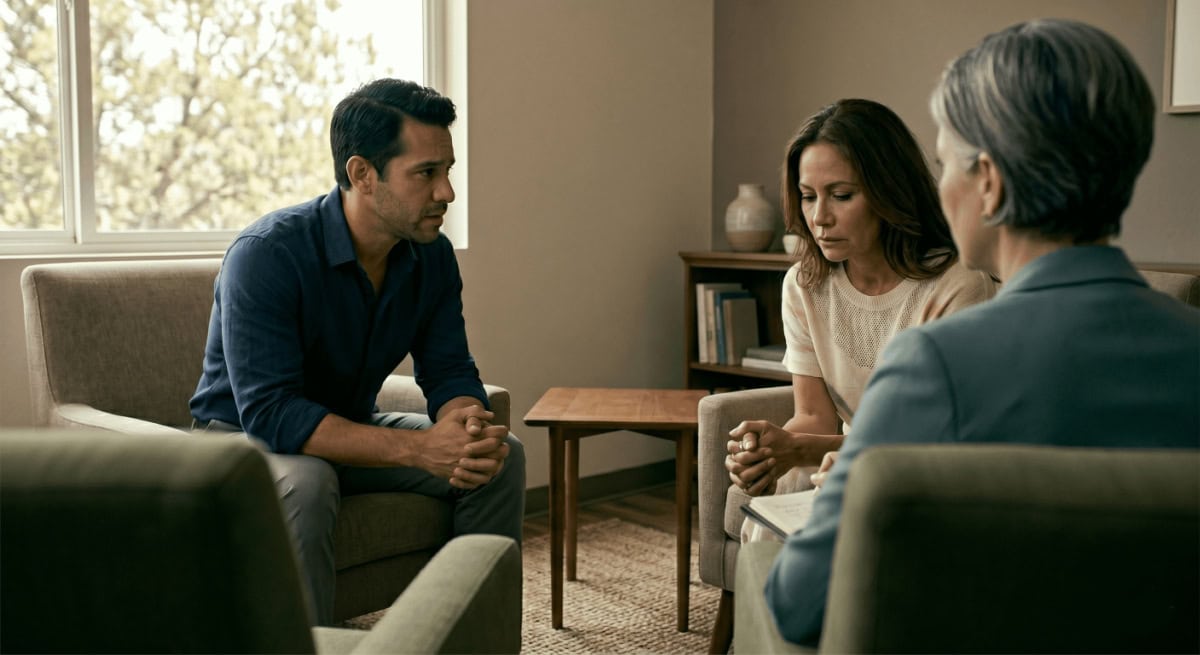
Couples counseling after betrayal does not always begin with a calm conversation. A difficult first call can tell me something about what a couple is facing, but it cannot tell me their whole story.
Sometimes the Couples I Worry About Most Surprise Me
Sometimes consultations don’t go where I think they will.
I’ve sat through Zoom calls with couples and left thinking, “I don’t know if this is going to happen. I’m not even sure they’ll come back.”
One person is desperately looking for help. The other is angry that we’re having the conversation at all.
And there I am, watching both of them through a screen, wondering how we’re going to get anywhere.
But sometimes, after a call like that, the couple surprises me.
They agree to come back. They begin participating. The couple I wasn’t sure I would see again starts doing the work.
That has taught me something about first conversations. They matter, but they do not tell me everything about what might happen next.
When One Partner Wants Help and the Other Pulls Away
The person asking for help may be looking for answers, support, and some way to understand what has happened to their relationship.
There may have been an affair, hidden pornography use, or other deceptive sexual behavior. They’re angry, hurt, scared, and tired of trying to figure it out alone.
They may have been carrying questions for weeks or months. They may have tried talking at home, only to end up in another argument.
This consultation might be the first time they’ve felt there is someone who can help them put words to what they’re experiencing.
Meanwhile, the person who caused the hurt may give short answers, become defensive, or look away. They may act as though talking about what happened is the problem.
I can recognize that they may feel exposed. There may be shame, guilt, or humiliation underneath the anger. I cannot know that from a facial expression alone, but I want to understand what makes it so difficult for them to stay in the conversation.
I can feel for both people while still being clear about who is responsible for the betrayal.
Understanding Discomfort Does Not Remove Responsibility
The betrayed partner still deserves honesty. They still need room to talk about the impact of what happened.
Feeling ashamed cannot become a reason the hurt person has to stay quiet.
If every question is met with defensiveness, the conversation can shift away from the betrayal and toward managing the discomfort of the person who caused it. The hurt partner may leave with their questions unanswered again.
Understanding that pattern matters. The goal is to help the person who caused the hurt remain present and take responsibility, while making room for the betrayed partner’s experience.
This is one reason safety must come before communication skills after betrayal. Asking people to speak more calmly does not, by itself, address deception or its impact.
Both people deserve care. Responsibility for the betrayal belongs to the person who chose it.
What Can Change After a Difficult First Consultation

Sometimes the couple I worried about agrees to come into counseling. They also agree to do other work to better understand the problem and what needs to change.
Then they show up.
Sometimes the couples who have the most conflict during that first consultation turn out to be the ones who work hardest for the relationship.
By that, I mean they keep showing up for difficult conversations. They begin listening. They work on taking responsibility. They practice responding differently, even when it feels uncomfortable.
The change may begin with something small.
A difficult question is heard without an immediate argument. A concern is acknowledged without being dismissed. Someone follows through on something they agreed to do.
These moments do not erase what happened. They can help us see whether a different pattern is beginning to develop.
Agreeing to counseling is a beginning. What follows matters.
What I Watch for in Couples Counseling After Betrayal
As we continue, I pay attention to more than whether both people attend the appointments.
Can the person who caused the hurt hear their partner’s pain without immediately defending themselves? Will they tell the truth when it would be easier to avoid it? Will they follow through outside the session?
I also pay attention to whether the betrayed partner has support for their own pain, questions, and choices.
Is there room for them to figure out what they need? Can they say they are unsure about staying? Are they being pushed to forgive or make a decision before they are ready?
A willingness to attend therapy matters. It does not replace the need for honesty, accountability, and respect for boundaries.
As I explain in my article on rebuilding trust after an affair, healing takes time. Trust needs more than reassurance. It needs repeated experiences that give the hurt partner a reason to believe something is changing.
Those are the patterns I watch for as the work continues.
What Anger Cannot Tell Me About a Relationship?
Anger in a consultation does not tell me how much someone loves their partner. It does not promise that the relationship will heal.
I also do not want anyone to hear this story and think they should tolerate intimidation or mistreatment because it means someone cares.
You do not have to accept mistreatment to give healing a chance.
A difficult conversation and an unsafe situation require different responses. If you feel afraid to speak honestly or worry about what will happen after the call, that matters when deciding what support is appropriate.
Couples counseling after betrayal is not automatically the right first step for every situation. Individual support may need to come first, particularly when there is ongoing deception, intimidation, or concern about safety.
What this work has taught me is that I cannot know a couple’s whole story from that first conversation.
Sometimes I’m meeting them at a moment when neither person knows how to talk about what has happened without becoming overwhelmed. That moment is real. So is the possibility that they will choose to respond differently with help.
Beginning Couples Counseling After Betrayal
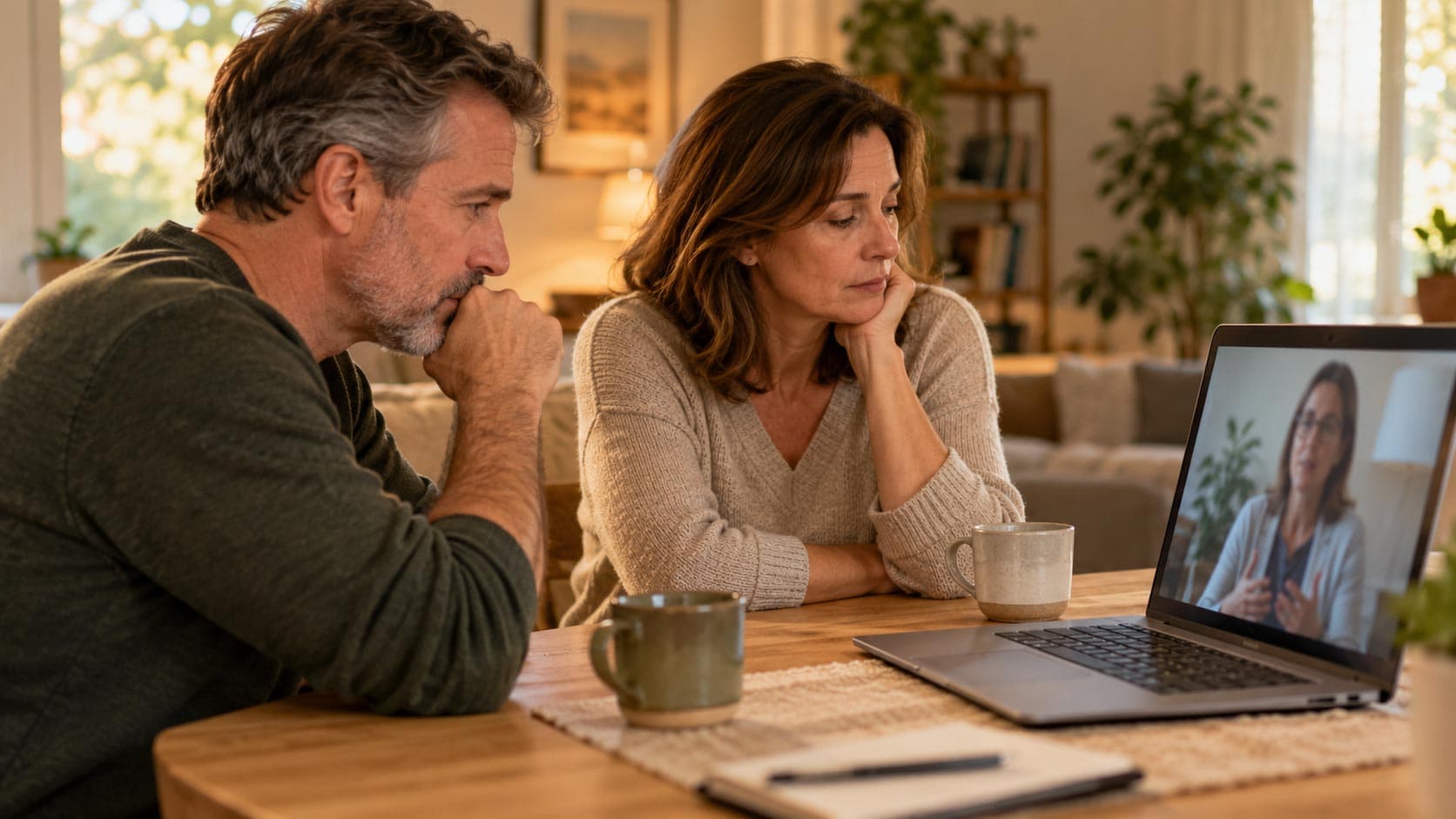
You do not need to use a first consultation to tell every detail of your relationship or decide its future.
A first call about couples counseling after betrayal is a chance to discuss what is happening and what kind of support you need.
You might want to understand whether individual therapy or couples work makes sense for your situation. You may have questions about betrayal trauma, hidden sexual behavior, or how to begin when you and your partner want different things.
You can also share what makes asking for help difficult. Perhaps you are worried about being blamed, pressured to forgive, or expected to make a decision before you are ready.
A consultation gives us a chance to begin discussing those concerns and possible next steps. It does not require a promise to stay together.
You Can Ask for Support Even if Your Partner Is Not Ready
Sometimes the biggest obstacle is the belief that both people have to be willing before anyone can get help.
If your partner will not participate, you can still seek support for yourself.
You may need space to sort through what you know, what remains uncertain, and what boundaries matter to you. You may want help understanding your reactions or deciding which questions you need answered.
Seeking individual support does not require you to decide whether you are staying or leaving. It gives you room to consider your own needs and choices.
Couples counseling after betrayal may become an option later. Your own support does not have to wait for that decision.
You Do Not Have to Know the Ending Before Asking for Support
If your conversations after betrayal have been painful, messy, or full of anger, you do not have to arrive at a consultation knowing how to explain everything calmly.
You can come with questions. You can come unsure whether you want to stay. You can come wanting help with your own next step, even if your partner is not ready to participate.
I have seen couples surprise me after a difficult beginning. I have also learned that hope needs to be supported by what happens next.
Whether your relationship continues or you decide on a different path, your pain and your choices deserve care.
You do not have to know the ending before you ask for support.
Schedule a Free 20-Minute Consultation
If you are dealing with betrayal and would like help understanding your options for support, I invite you to schedule a free 20-minute consultation with me.
We can talk about what is happening, what you need, and whether individual therapy or couples counseling after betrayal would be an appropriate next step.
I bring more than 31 years of clinical experience to my work with individuals and couples. I offer in-person therapy in San Antonio and online therapy across Texas.
Schedule a Free 20-Minute Consultation
Cheryl Camarillo,
LCSW, CSAT, CST, DSTT